5 Things You Need to Know About Your Parasympathetic Nervous System
1. It Can Be Activated on Purpose
Your parasympathetic nervous system is not entirely beyond your control. There are specific, scientifically supported inputs that signal the brain to shift out of sympathetic activation and into the parasympathetic state. Slow, extended exhale breathing is one of the most direct. Somatic body awareness, intentional movement, and certain mindset practices are others. The key insight — and the one most people miss — is that this is a trainable skill, not just a lucky accident.
2. The Exhale Is More Powerful Than the Inhale
When it comes to breathing for nervous system activation, the exhale is your most powerful tool. The exhale phase of breathing directly stimulates the vagus nerve — the primary nerve of the parasympathetic nervous system — which sends a safety signal back to the brain. A slow exhale that is longer than the inhale (try 4 counts in, 7 counts out) is one of the fastest ways to manually shift your body's state.
3. Chronic Stress Changes Your Nervous System Over Time
This is both the sobering reality and the reason nervous system training matters so much. When the sympathetic nervous system is chronically activated, it literally reshapes neural pathways — making the stress response faster, more automatic, and harder to interrupt. Over time, this contributes to anxiety disorders, burnout, physical illness, and relational breakdown. The good news: neuroplasticity means those pathways can be reshaped in the other direction too. The nervous system can be retrained.
4. Your Nervous System State Is Contagious
Research in co-regulation — the way nervous systems attune to one another — shows that our physiological states are deeply influenced by the people around us. A dysregulated leader raises the stress levels of an entire team. A calm presence in a chaotic environment brings other nervous systems down with it. This is why nervous system training isn't just personal development — it's leadership development, parenting development, and community development.
5. The Parasympathetic State Is Where Real Recovery Happens
Sleep is not the only form of recovery your body needs. True nervous system recovery happens in the parasympathetic state — which means it requires more than just being still or distracted. Watching TV, scrolling your phone, or even napping don't always produce genuine parasympathetic activation. Deliberate, trained practices do. This is the difference between rest that actually restores and rest that just passes time.
The Vagus Nerve: The Highway to Calm
No discussion of the parasympathetic nervous system is complete without the vagus nerve — the longest cranial nerve in the body, and the primary communication pathway between your brain and your internal organs.
The vagus nerve is the main channel through which parasympathetic signals travel. When it's well-toned — meaning it responds quickly and reliably — your body can shift fluidly between activation and calm. When vagal tone is low (as is common in chronically stressed individuals), that shift becomes sluggish and difficult.
The extraordinary thing about the vagus nerve is that it runs in both directions. Your brain sends signals down to the body. But your body also sends signals up to the brain. This means that physical inputs — the way you breathe, how you hold your body, the sounds you hear, even your gut health — all influence your mental and emotional state through vagal signaling.
This bidirectional pathway is exactly why neuroscience-based somatic tools work so powerfully. By changing what the body is doing, you can change what the brain is doing.
How Global Warrior Trains the Parasympathetic Response
Global Warrior's NSR™ Nervous System Reset training was built on a single foundational insight: the parasympathetic state is not just a destination — it's a trained skill.
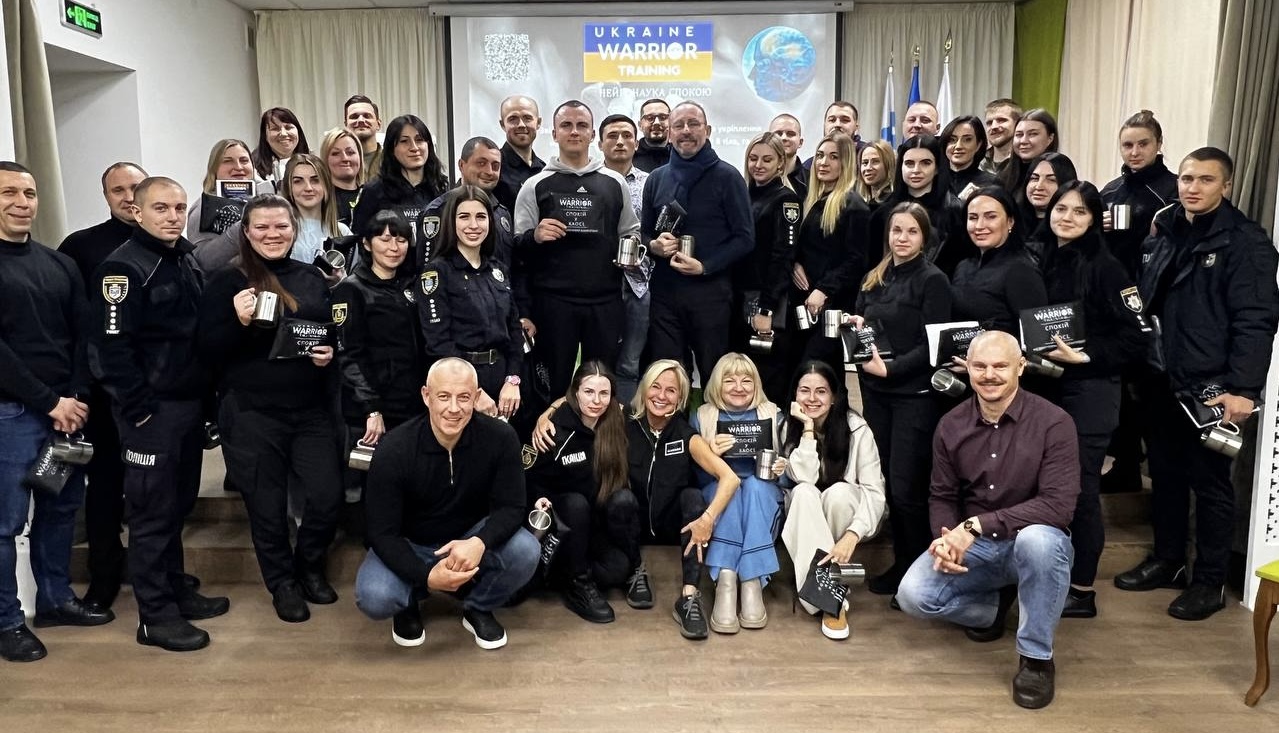
Using a methodology developed by Jill Tupper, M.A. — and refined through more than 3,000 training sessions in the active war zones of Ukraine — NSR™ equips people with a practical toolkit for shifting from sympathetic to parasympathetic on demand. Not in ideal conditions. Not after a week of vacation. In the middle of the hardest moments of their lives.
Participants don't just learn about the parasympathetic nervous system. They learn how to access it. They practice activating it. And they leave with a repeatable, personal system for resetting their nervous system whenever and wherever they need it.

%20(2).png)
.png)