The Top 10 Stress Management Tools That Work at the Nervous System Level
1. Alternate Nostril Breathing
Alternate nostril breathing is one of the most powerful and immediate tools for shifting the nervous system out of high-alert and into calm. Unlike general deep breathing, this technique works by balancing activity between the left and right hemispheres of the brain, directly calming the sympathetic stress response and activating the parasympathetic state.
How to use it: Sit comfortably and bring your right hand to your face. Use your thumb to close your right nostril and inhale slowly through your left nostril for 4 counts. Close both nostrils briefly, then release your thumb and exhale fully through your right nostril for 6–8 counts. Inhale through the right nostril, close again, then exhale through the left. That's one complete cycle. Repeat for 5–10 cycles. The alternating pattern is key, and it creates a rhythmic, balanced signal that your nervous system reads as safety.
From Jill Tupper, Founder of Global Warrior:
"One of my favorite memories of teaching this tool is from my car, on the morning school run with my daughter Journey. Before she'd get out and walk into her day, we'd sit in the parking lot together and do a few rounds of alternate nostril breathing. Just the two of us, hands up, switching sides, breathing. It became our ritual. She'd step out of that car calmer, clearer, and more grounded than when she got in. That's the power of this tool. It doesn't require a studio, a therapist, or a perfect set of conditions. It just requires two minutes and a willingness to try. If a teenager can do it in a school parking lot, you can do it anywhere."
Why it works: Research shows alternate nostril breathing significantly reduces heart rate, lowers cortisol, and improves cardiovascular function within minutes. It also enhances focus and mental clarity — making it uniquely effective not just for calming down, but for returning to sharp, clear thinking under pressure.
2. Body Scanning and Somatic Awareness
Stress lives in the body, not just the mind. Body scanning is the practice of deliberately bringing attention to physical sensations — tension in the jaw, tightness in the chest, heaviness in the shoulders — without trying to fix or judge them. This alone can interrupt the automatic stress cycle.
Why it works: You can't change what you can't notice. Building somatic awareness is one of the foundational stress management skills that makes every other tool more effective.
3. Turn Off Your Phone Notifications
This one sounds almost too simple, but don't underestimate it. Every ping, buzz, and banner that lights up your phone is a micro-threat signal to your nervous system. Your brain is wired to treat interruption as a potential danger, which means every notificatio, even the irrelevant ones triggers a small but real sympathetic activation. Multiply that by dozens of interruptions a day, and you have a nervous system that never fully settles.
The research backs this up: studies show that the mere presence of a smartphone reduces available cognitive capacity, and that constant notification interruptions significantly elevate stress hormones and fragment the kind of deep focus that makes you feel capable and in control.
How to use it: Start with one protected block of time per day, even just 60 minutes, with all non-essential notifications turned off. No social media pings. No email banners. No news alerts. Use that window to do focused work, connect with someone in person, or practice one of the other tools on this list. Notice how different your nervous system feels at the end of it compared to a typical hour of constant digital interruption.
Why it works: Reducing incoming threat signals gives your nervous system the space to downshift. By doing this, you’re actively reducing the number of times per day your brain is pulled into sympathetic activation. Over time, protecting even small pockets of uninterrupted time can meaningfully lower your baseline stress level.
4. Mindset Reframing Through Neuroscience
Thought shapes neurological reality. When you perceive a situation as threatening, your brain responds with the sympathetic stress response. When you perceive the same situation as a challenge you're equipped to handle, the response is fundamentally different.
This isn't positive thinking — it's applied neuroscience. Training yourself to shift the meaning you assign to stressors is one of the most powerful long-term stress management skills available.
5. Visualization, Positive Self-Talk, and The Observer
These three tools belong together because they all work at the same level: the story your mind tells about who you are and what you're capable of. And that story has a direct, measurable impact on your nervous system state.
Visualization and Mental Rehearsal
Elite athletes have used visualization for decades — not because it's a feel-good trick, but because the brain cannot fully distinguish between a vividly imagined experience and a real one. Rehearsing calm, clear performance activates the same neural pathways as actually doing it.
Practical use: Before a high-pressure situation, spend 5 minutes vividly imagining yourself responding with calm, clarity, and confidence. Your nervous system will be partially primed before you even walk in the room.
Positive Self-Talk
The words you use about yourself are not just motivational fluff, but they are neurological inputs. Self-critical internal dialogue activates the same stress response as an external threat. Consistent, deliberate, truthful positive self-talk builds new neural pathways that make calm and confidence the default, not the exception.
The key word here is truthful. This isn't about toxic positivity or pretending everything is fine. It's about choosing accurate language that reflects your real capability rather than defaulting to the distorted, diminishing narrative that stress tends to produce.
The Observer — A Preview of What NSR™ Training Introduces
One of the most transformative tools taught inside NSR™ training is a concept called The Observer. It's deceptively simple — and extraordinarily powerful.
The Observer invites you to step outside yourself, particularly in high-stress moments or quiet moments of self-doubt, and consider what others actually see when they look at you. Not the harsh inner critic's version. Not the comparison trap. The honest, outside perspective.
From Jill Tupper, Founder of Global Warrior:
"I've completed seven sprint triathlons and multiple marathons. And yet when someone once called me an athlete, my immediate reaction was — 'What? I'm not an athlete.' In my mind, athletes were professionals. People who had dedicated their lives to competition. I was comparing myself to a standard so far out of reach that I couldn't even see my own reality clearly.
"The Observer asked me to step into the shoes of the person making that comment. To see what they saw. Someone who had voluntarily signed up for some of the most physically demanding endurance competitions in the world. Competitions that fewer than 5% of the global population will ever attempt. From the outside, that looks like an athlete. The Observer helped me see what stress, comparison, and self-diminishment had been hiding from me: the truth about who I actually am.
"That's what The Observer does. It cuts through the noise of your inner critic and gives you access to a more accurate, more generous, and more grounded version of yourself. And when you operate from that version, your nervous system follows."
In high-stress situations, The Observer can interrupt the downward spiral of self-doubt and catastrophic thinking by anchoring you to how a calm, clear-eyed outsider would assess the situation. In quiet moments, it's a practice of honest self-recognition seeing your real strengths, real progress, and real identity without the distortion of chronic stress.
This is one of many tools explored in depth during NSR™ live training. It's a neuroscience-informed practice for accessing a clearer, stronger version of yourself on demand.
6. Intentional Physical Movement
Movement is one of the fastest ways to shift your nervous system state — but the type of movement matters. Vigorous exercise can be helpful, but when the goal is to move out of a stress state rather than discharge it, intentional, slower movement (walking, stretching, shaking, or rhythmic movement) can be more effective.
Why it works: Physical movement signals to your brain that you've successfully responded to the threat. This helps complete the stress cycle and return your body to baseline.
7. Journaling for Nervous System Clarity (Not Venting)
Most people journal by dumping their worries onto the page — which can actually reinforce the stress state by re-immersing the nervous system in the experience. Effective journaling for stress management is different: it's structured, forward-focused, and paired with specific prompts designed to shift perspective.
Try this: Instead of writing about what's stressing you, write about three things within your control right now, one step you can take today, and one thing that is going right.
8. Nervous System Reset™ (NSR™) Tools
NSR™ is a neuroscience-based training methodology developed by Jill Tupper, M.A., designed specifically to train the nervous system to shift out of sympathetic activation and back into the parasympathetic state — on demand, without therapy, and without a waitlist.
Unlike passive wellness practices, NSR™ teaches practical, repeatable tools that interrupt chronic stress patterns at the neurological level. Participants learn to recognize when their nervous system has been hijacked by stress — and exactly how to reset it.
9. The Release, Rest, Reset, Restore™ Framework
One of the core principles of NSR™ training is a four-stage process: Release the stress held in the body → Rest the nervous system through deliberate calm → Reset the internal baseline → Restore energy, clarity, and purpose.
This framework is particularly powerful because it gives structure to recovery — which is something most anxiety and stress management approaches skip entirely. Recovery isn't passive. It's trained.
10. Community and Cohort-Based Accountability
Research consistently shows that stress management skills are more effectively maintained when learned and practiced in community. Isolation reinforces the sympathetic stress response. Connection, particularly with others who are also committed to growth, activates the body's social engagement system, which is part of the parasympathetic pathway.
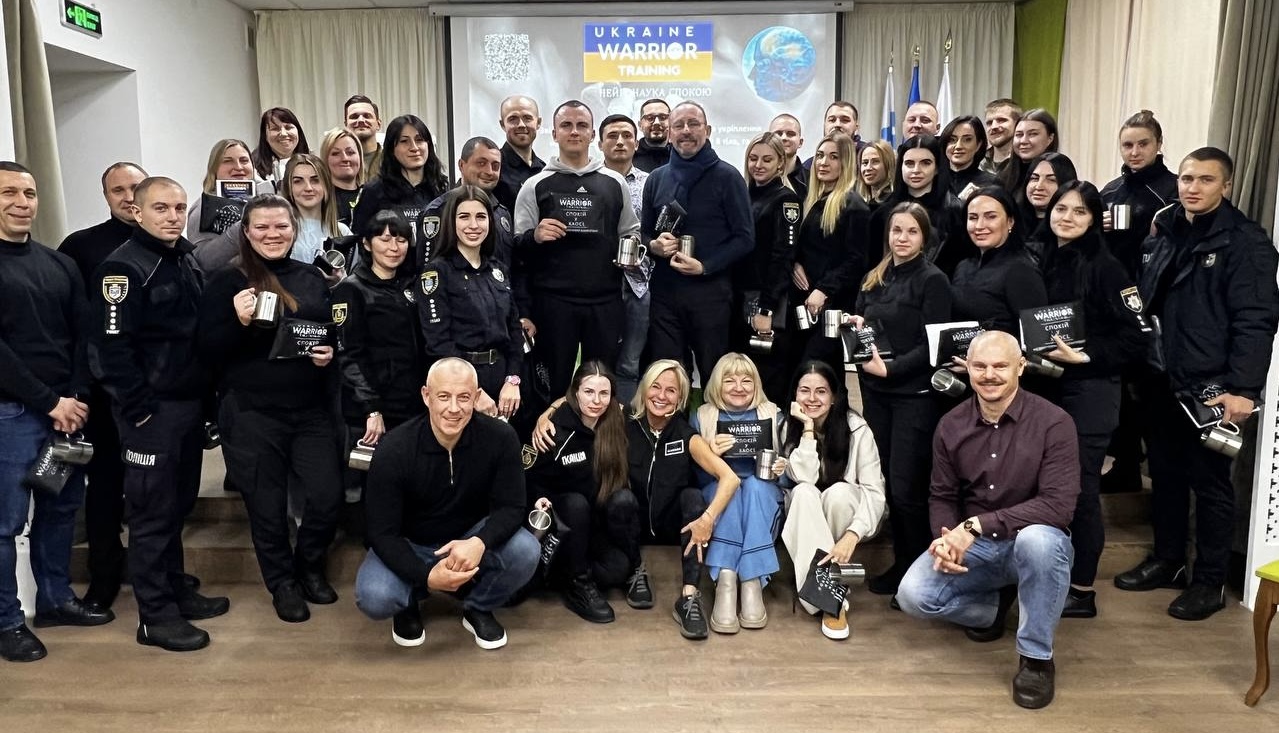
This is why NSR™ training isn't a solo app or a workbook. It's a live, immersive, community-based experience because the nervous system heals and grows in relationship.
Why it works — and why it works better than going it alone:
Dr. Stephen Porges' Polyvagal Theory offers a compelling neurological explanation for why community is so powerful for stress recovery. According to Polyvagal Theory, the human nervous system has a third branch (beyond fight/flight and shutdown) called the social engagement system. This system, governed by the ventral vagal pathway, is activated specifically through safe, attuned human connection: eye contact, tone of voice, shared experience, and felt belonging.
When this system is online, it actively downshifts the sympathetic stress response at the physiological level. In other words, being genuinely connected to other people is one of the most powerful nervous system reset tools available.
This is why isolation is so damaging during chronic stress, and why so many people find that their anxiety worsens the more they withdraw. The nervous system is not designed to heal alone. It's designed to co-regulate through safe relationship.
Cohort-based learning adds another layer: accountability. When you're working alongside others who are practicing the same tools, tracking the same shifts, and showing up for the same commitment, the probability that you'll maintain those tools outside of training increases dramatically. You're not just learning — you're building a new identity, in community, with witnesses. That's a fundamentally different experience than reading a book or watching a video alone.
The practical implication is this: whatever stress management tools you're working with, find a way to practice them with other people. A training cohort. A small group. A trusted friend who's doing the same work. The nervous system will respond differently when it’s not at it alone.

.png)
%20(2).png)